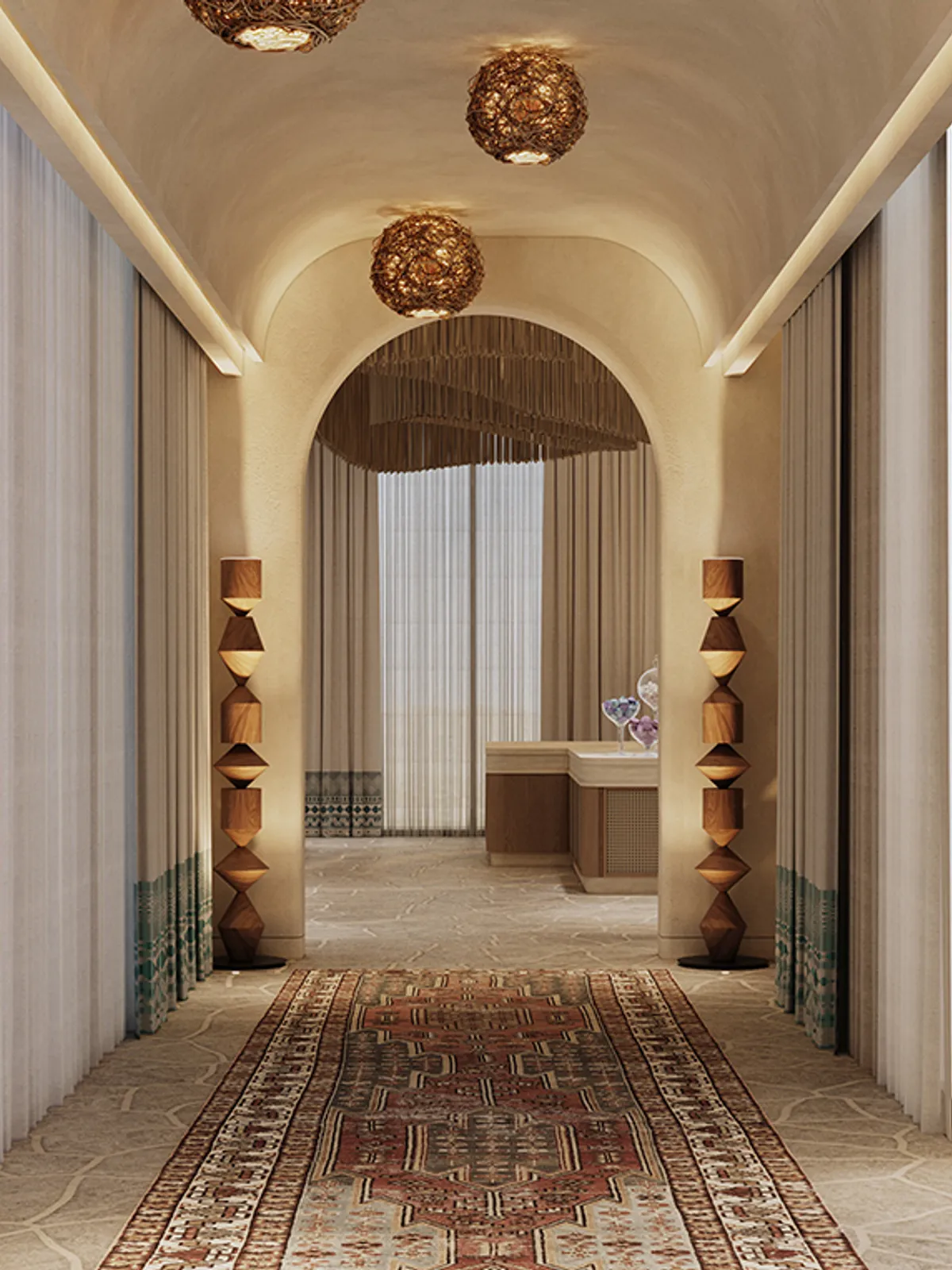
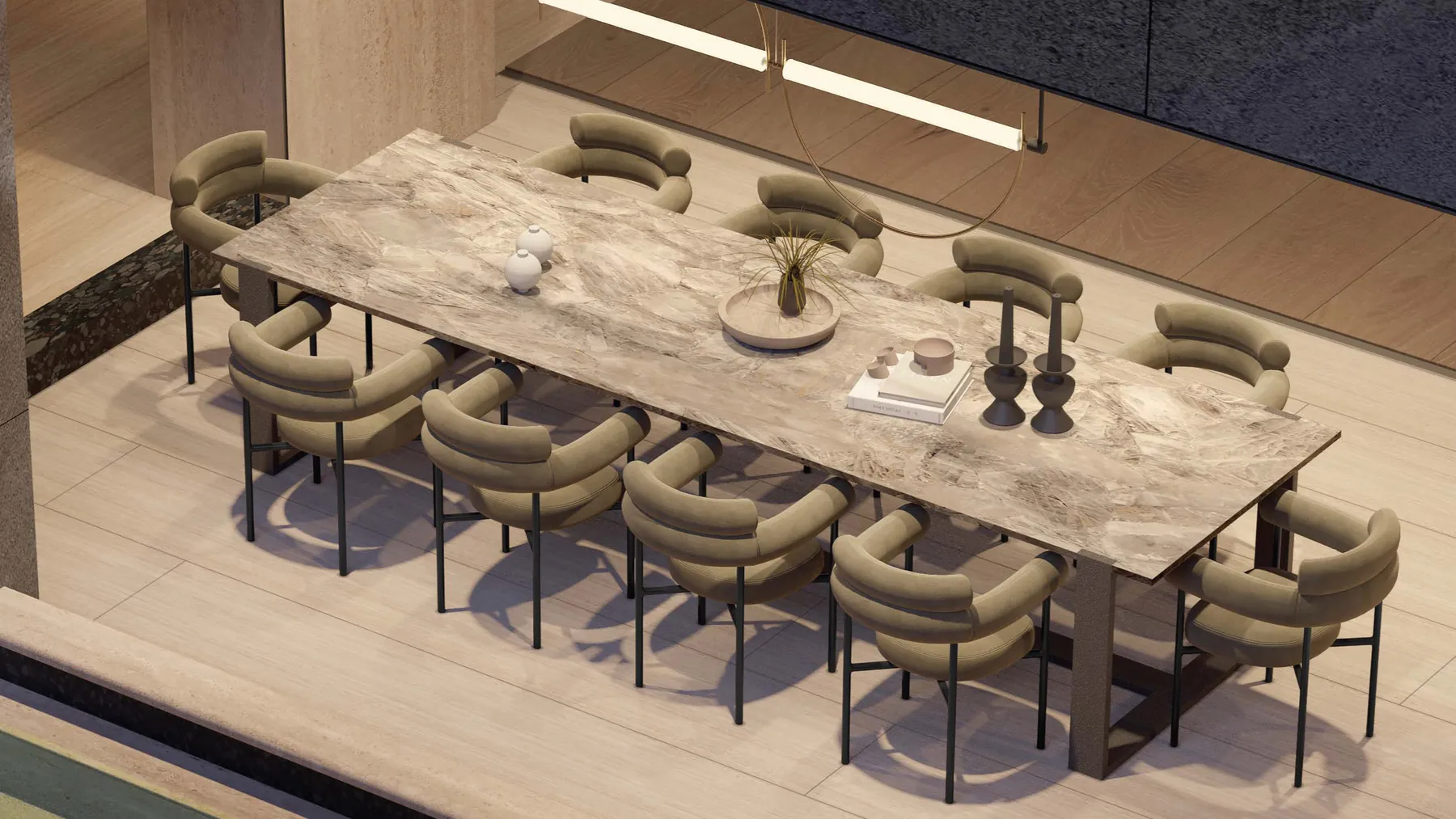
Exceptional hospitality spaces are not defined by decoration alone. They are shaped by atmosphere, flow, and the way people move, pause, and connect within them. As a hospitality interior designer, we create environments that feel intentional from the first step inside, supporting guest experience while reinforcing brand identity at every touchpoint.
Concept development & brand alignment
Spatial planning & zoning
Custom furniture & integrated design
Materials & finish specification
Lighting & atmosphere
Final styling & project transition
Hospitality interiors carry a unique responsibility. They must perform seamlessly while creating a sense of place that guests remember long after they leave. Our approach begins with understanding how a space is meant to feel, not just how it should look.
As a hospitality design company, we take time to study brand positioning, guest expectations, operational flow, and context. We look at how people arrive, how they move through the space, where they linger, and how atmosphere shifts throughout the day and evening. These insights guide every design decision that follows.
From early concept through detailed development, we shape interiors that feel cohesive and deliberate. Materials are chosen for durability as well as character. Proportions are refined to encourage comfort and ease. Lighting is layered to adapt to mood, time, and use. The result is an environment that supports service, enhances experience, and feels unmistakably aligned with the brand it represents.
Our portfolio reflects a wide range of hospitality projects, from intimate venues to large-scale commercial environments. Each project is shaped by its unique context, brand, and audience, yet all share a commitment to clarity, refinement, and experiential design.
As one of the hospitality design firms working across diverse hospitality sectors, our work demonstrates how thoughtful interiors can elevate perception, encourage return visits, and support long-term brand growth. These spaces are designed not for trends, but for lasting relevance.
Hospitality spaces are used continuously, often under pressure. Design decisions must respond to how a space performs across service hours, staffing patterns, and changing guest volumes. Our approach reflects the operational understanding expected from leading hospitality design firms, prioritizing clarity, durability, and adaptability without sacrificing atmosphere.
We consider how guests arrive and orient themselves, how seating supports different group sizes, and how circulation works during peak periods. Sightlines, acoustics, and lighting are resolved to support comfort and conversation, even as energy levels shift throughout the day.
As a hospitality interior designer, we design interiors that remain composed from morning service through late evening use. Restaurants, lounges, and shared spaces are planned to transition naturally as light changes and occupancy fluctuates. These environments are shaped to function consistently while allowing atmosphere to evolve through thoughtful spatial planning and lighting strategy.
Hospitality interiors must work hard behind the scenes while appearing effortless on the surface. Circulation, zoning, and spatial hierarchy are essential to this balance.
We design layouts that guide guests intuitively while supporting staff efficiency. Entrances, transitions, seating arrangements, and service zones are carefully planned to avoid congestion and confusion. Furniture placement supports movement without interrupting conversation or comfort.
As a hospitality design company, we understand that a successful interior is one where guests feel relaxed, oriented, and engaged, even during peak service. Flow is not just about movement, but about pacing, pause, and visual clarity.
Every hospitality project presents unique challenges and opportunities. Below are answers to some of the most common questions about working with a hospitality interior designer and our design process.
Projects move through defined stages, from early concept through detailed development and final delivery. Client input is concentrated at key decision points, allowing the design to progress efficiently while remaining aligned with vision, brand, and operational needs.
Yes. Many projects undertaken by hospitality design firms involve adapting existing spaces. We assess what can be retained, what should be refined, and where change will have the greatest impact, improving performance and guest experience without unnecessary disruption.
We regularly coordinate with architects, builders, consultants, and specialist trades. Interior decisions are developed in dialogue with the wider project team to ensure feasibility, buildability, and consistency across all disciplines.
Our scope typically covers furniture, lighting, finishes, and key interior elements. Specifications are developed to balance visual intent with durability, maintenance, and operational requirements specific to hospitality environments.
Yes. We frequently work from pre-existing plans. Our role as a hospitality interior designer is to refine layouts, detailing, and material selections to enhance usability, flow, and cohesion while respecting the established architectural framework.