BG
By iMaker Group
Understanding Office Interior Design in Contemporary Commercial Spaces
4 Min Read
11.02.2026
- Blog
Office interior design is more than simply arranging desks, chairs, and lighting. In contemporary commercial spaces, it shapes how people work, collaborate, and feel throughout the day. Thoughtful office design balances aesthetics with functionality and experience to create environments that support productivity, well-being, and long-term adaptability. When executed well, interior design transforms an office from a purely functional location into a space that enhances professional performance and reflects organizational identity.
In this article, we explore office interior design beyond superficial styling. We focus on how design decisions are made, how spaces are shaped to meet real-world needs, and how modern offices integrate human experience with architectural intention.
At its core, office interior design is the practice of planning, designing, and refining commercial interiors to optimize function, comfort, and experience. It considers circulation, ergonomics, acoustics, lighting, materiality, and spatial hierarchy. Interior design doesn’t start with furniture choices or color palettes. It begins with understanding how the office will be used and how people interact within it.
A well-designed office supports multiple modes of work like focus, collaboration, learning, and socialization. It allows your employees to move seamlessly between tasks, supports diverse needs, and anticipates future growth. It also reflects the company’s culture and brand identity.
Modern office interior design is human-centered. Our designers consider how people actually experience a space throughout the workday. Where do employees gather for informal meetings? How does natural light shift across desks during the afternoon? Are break areas calming and inviting? How does circulation accommodate high traffic without creating bottlenecks?
These questions shape our decisions about layout, furniture, and finishes. Interior designers balance visual appeal with practical performance, ensuring that spaces feel intuitive rather than imposed. A conference room might prioritize acoustics and sightlines, while a communal kitchen supports social interaction.
Office interiors rarely exist in isolation. They’re inseparable from architectural structure. Ceiling heights, window placement, structural columns, and mechanical systems all influence interior choices. Our interior designers interpret architectural plans to create cohesive environments that feel proportioned, functional, and aesthetically harmonious.
Early collaboration with architects allows designers to influence spatial layouts, circulation patterns, and lighting access. For instance, positioning collaborative zones near natural light can boost creativity and well-being, while quieter zones for focused work benefit from sound-buffering strategies.
Function drives office interior design. Spaces are planned to support workflow, interaction, and adaptability. Key considerations include:
In office design, material choices influence not only aesthetics but also experience. Materials affect acoustics, durability, and perception of space. For example:
Texture and color also shape spatial perception. Lighter finishes can expand a compact office, while layered materials create depth and tactility in larger, open-plan environments.
Lighting is a critical element of office interior design. Natural light improves mood, reduces fatigue, and supports circadian rhythms, while artificial lighting guarantees consistent visibility and visual comfort. A well-designed office combines ambient, task, and accent lighting.
For instance, pendant lights above collaborative tables focus attention and encourage interaction, while recessed lighting in quiet zones minimizes glare. Adjustable controls allow employees to tailor light levels to their activity and preference.
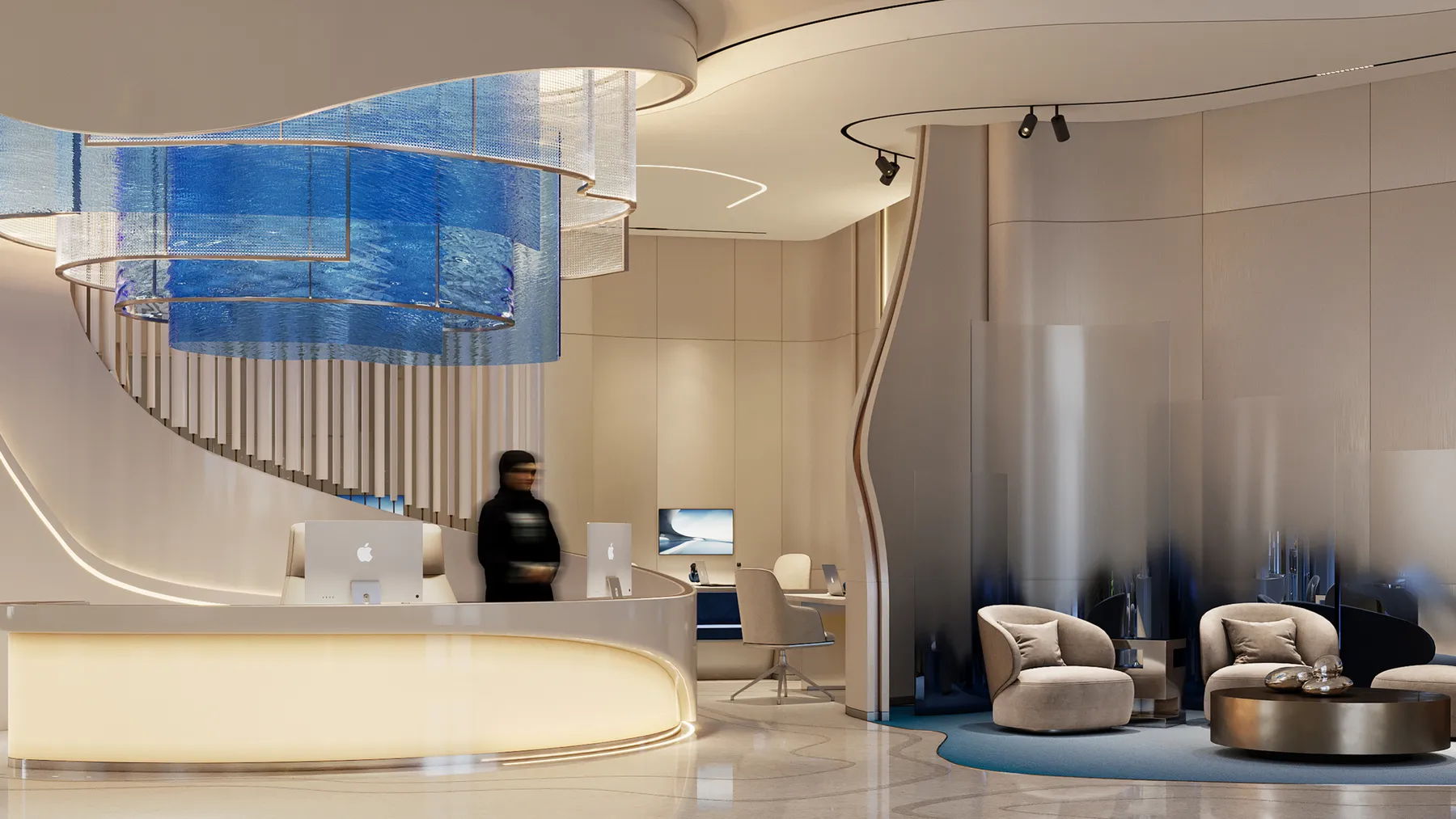
Office interiors also communicate organizational identity. Material choices, finishes, color palettes, and furnishings convey culture, values, and professionalism. An innovation-focused company may include dynamic layouts, bold finishes, and playful elements, while a financial firm might prioritize refined, timeless materials and structured spatial organization.
Sustainable design is increasingly central to office interiors. Our designers select durable materials, low-VOC finishes, and energy-efficient lighting and HVAC systems. Flexible layouts and modular elements reduce waste and allow your office to adapt as organizational needs evolve.
Longevity is a design principle as important as sustainability. Your office should remain functional and relevant for years, avoiding short-lived trends that require frequent renovation. Interior design balances aesthetics, durability, and adaptability to ensure spaces serve employees and organizations long-term.
Designing a contemporary office typically follows structured phases:
Throughout this process, collaboration with architects, engineers, and contractors ensures the design is realistic and executable.
Office interior design shapes productivity, collaboration, and workplace satisfaction. Well-designed spaces reduce stress, encourage interaction, and support health. They help your employees feel valued and aligned with your organizational culture.
Investing in interior design is not an expense. It’s a strategic decision that influences the daily experience, talent retention, and long-term adaptability. The environments we create guide behavior, shape perceptions, and improve outcomes for everyone who uses them.